
How does reverse osmosis work?
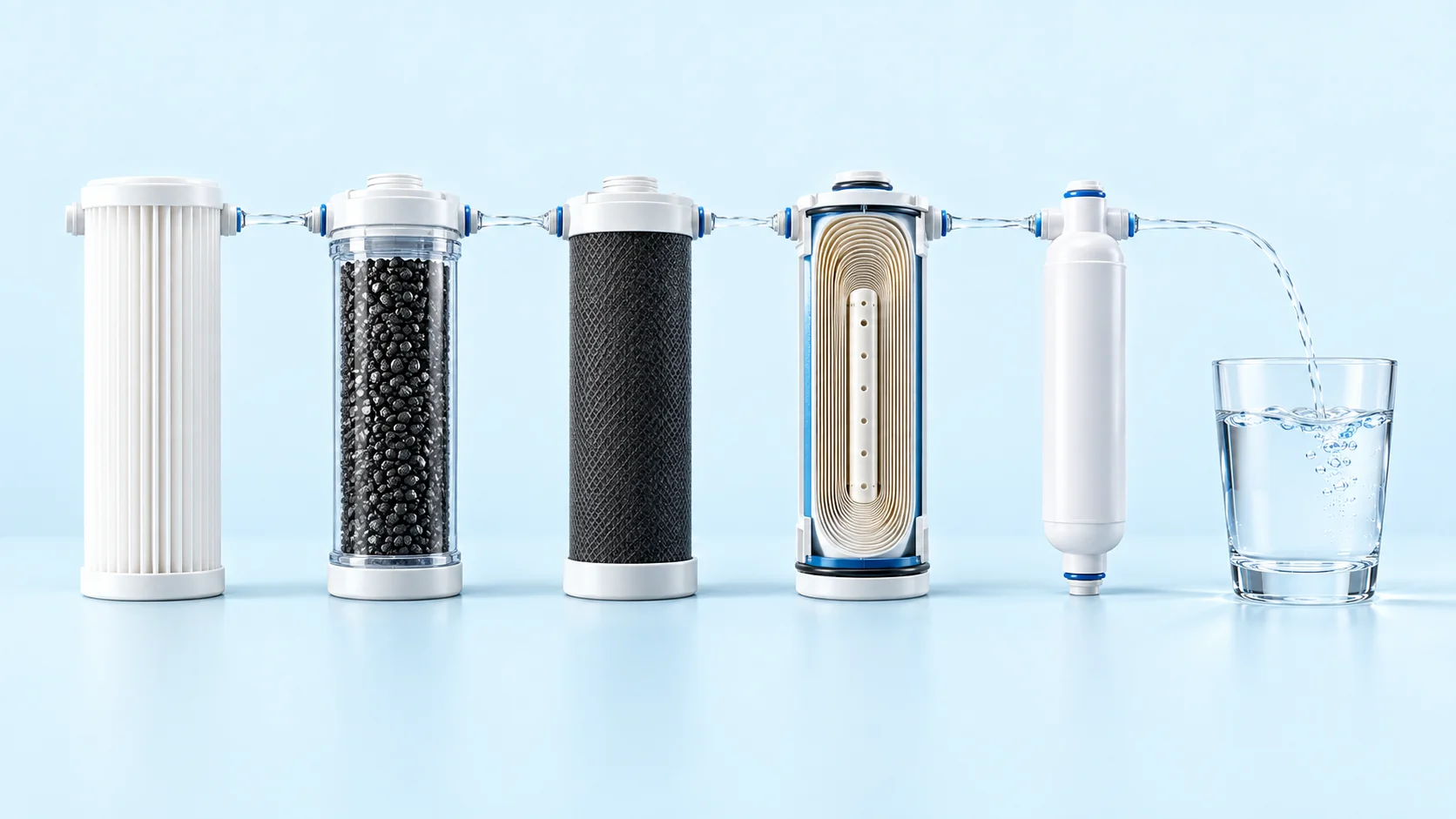
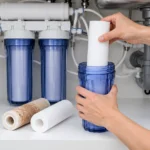
Reverse osmosis is one of the most thorough filtration methods for tap water. It relies on a very fine membrane that lets water molecules through and holds back a large share of dissolved substances. Here is, step by step, what happens inside a typical home reverse osmosis system.
The principle in a few words
In nature, osmosis moves water from a weakly concentrated solution towards a more concentrated one. Reverse osmosis does the opposite: using mains pressure (and sometimes a pump), water is pushed through a semi-permeable membrane. The filtered water, called « permeate », goes to the filtered-water tap; the substances held back are flushed to the drain with part of the water.
The filtration stages
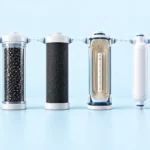
1. The sediment pre-filter
It traps visible particles such as sand, rust and deposits. It protects the following filters and the membrane, which would otherwise clog quickly.
2. The activated carbon filter
Activated carbon reduces chlorine, unpleasant tastes and odours, as well as some organic compounds. This stage matters because chlorine can damage the membrane.
3. The reverse osmosis membrane
This is the heart of the system. Its extremely fine pores hold back a large share of dissolved mineral salts, limescale and many pollutants. The level of reduction depends on the membrane, the pressure and the quality of the incoming water: technical data sheets usually state a rejection rate.
4. The post-filter
Placed after the tank or at the membrane outlet, it refines the taste of the water before it reaches the tap.
5. Remineralisation (optional)
Some systems add a cartridge that puts a small amount of minerals back into the water, for a rounder taste.
With or without a tank?
« Classic » systems store filtered water in a small tank under the sink. « Tankless » (direct-flow) models use a pump to produce water on demand: they are more compact but need a power supply.
Key points
- Reverse osmosis combines several filters, each with a specific role.
- The membrane is the main component; the pre-filters protect it.
- Regular maintenance (filter changes) is essential to keep the water quality high.
Not sure which system to choose? Browse our Reverse osmosis systems and parts category or contact us: we will advise you.
Questions about your installation?
Send us your device reference or describe what you need: we will help you choose the right system or cartridge.

Systèmes d’osmose inverse, filtres, robinets et équipements de traitement de l’eau pour les particuliers et les professionnels.
Reverse osmosis systems, filters, taps and water treatment equipment for households and businesses.
